

NATO Exercises 2026: The Complete Guide to Allied Readiness
A continually updated guide to every confirmed NATO exercise in 2026 – dates, locations, and what each drill means for collective defence. Perfect for students, journalists, and security professionals. Last update: 15 September 2026.

NATO's 2026 training calendar in one place: drill dates, domains, and deployments across the alliance, updated as confirmations land. The 2027 calendar is tracked on its own page.
Why This Article Matters (and Why You Should Bookmark It)
NATO's exercise calendar is never published in one go. SHAPE populates its schedule incrementally — typically confirming winter/spring drills first, with summer and autumn exercises announced as late as April or May. For journalists, policy analysts, and security professionals, this creates an information gap.
This guide closes it: a single, evergreen reference updated within 24 hours of any official confirmation. No more piecing together press releases from SHAPE, DVIDS, and a dozen national defence ministries.
Interactive Map: NATO Exercises in 2026
Zoom, click, or hover to explore the geographic distribution of this year’s drills.
Marker positions approximate. Marker size scaled by personnel count (power-law). Translucent purple zones represent NATO's three persistent Sentry operations. Romania's confirmed but date-TBC programme is shown as a single grouped marker. Last update: 15 September 2026.
2026 NATO Exercise Calendar at a Glance
| Exercise | Dates (2026) | Core Domain(s) | Host Nations / Regions |
|---|---|---|---|
| Completed | |||
| Steadfast Dart 26 | 2 Jan – 18 Mar | Multi-domain (ARF deployment) | Germany (Lower Saxony) / Baltic Sea |
| Dynamic Front 26 | 26 Jan – 13 Feb | Artillery / Multi-domain fires | Romania (Cincu) |
| Arctic Dolphin 26 | 2–24 Feb | Naval / ASW | Norway (western fjords) |
| ORION 26 | 8 Feb – 30 Apr | Multi-domain (France-led, 24 nations) | France / Atlantic |
| Northern Quadriga 26 (NOQA@Sea) | 20–25 Feb (at-sea phase) | Naval / Port & sea-line protection | North Sea / German waters |
| Dynamic Manta 26 | 23 Feb – 6 Mar | Naval / ASW | Mediterranean Sea |
| Grand Quadriga 26 (GRQA26) | Late Feb – early Mar | Land / ARF integration | Germany (Bergen) |
| Dynamic Mariner 26 | 5–20 Mar | Naval (ARF Maritime) | Mediterranean Sea |
| Cold Response 26 | 9–19 Mar | Multi-domain Arctic | Norway, Finland |
| Steadfast Foxtrot 26 | 16–26 Mar | Sustainment / Medical / Enablement | Germany (Ulm) |
| Sea Shield 26 | 23 Mar – 3 Apr | Naval | Romania, Black Sea |
| Neptune Strike 26-1 | 25 Mar – 1 Apr | Multi-domain / Carrier Strike | Western & Central Mediterranean |
| African Lion 26 | 20 Apr – 8 May | Multi-domain | Morocco, Tunisia, Ghana, Senegal (+ partners) |
| Neptune Strike 26-2 | late Apr – 30 Apr | Multi-domain / Carrier Strike | Mediterranean (Western, Central, S-Eastern) |
| AURORA 26 (linked to Sword 26) | 27 Apr – 13 May | Maritime / Air / Joint reinforcement | Sweden |
| Sword 26 (Saber Strike / Immediate Response / Swift Response) | 27 Apr – 31 May | Multi-domain (USAREUR-AF-led) | Germany, Poland, Finland, Estonia, Lithuania (+ linked) |
| Thunder Fortress 26 (Thunder cycle, CPX phase) | concluded 14 May | Command-post / Multi-domain | Lithuania |
| Mare Aperto 26-1 | 3–27 May | Naval / Multi-domain (ITA-led) | Central Mediterranean |
| NATO Tiger Meet 2026 | 4–15 May | Air (multinational) | Greece (Araxos AB) |
| Spring Storm 2026 (Kevadtorm 26) | 4 May – 1 Jun | Multi-domain (land focus) | Estonia (+ NE Latvia) |
| Operation Firecrest (Phase 1 → autumn Phase 2) | 5 May – 24 Jul (Phase 1) | Naval / Carrier Strike (UK CSG) | North Atlantic / High North |
| Steadfast Deterrence 26 | 5–13 May | Strategic / operational CPX | NATO-wide; Arctic focus |
| NATO–Serbia Exercise 2026 | May (concluded 21 May) | Land / Peace support | Serbia (Bujanovac) |
| Trojan Footprint 2026 | 11–22 May | Special Operations (multi-domain) | Multi-country (Eastern Europe / Greece) |
| Dynamic Mongoose 26 | 18–29 May | Naval / ASW | Norwegian Sea / GIUK-N Gap (Norway-hosted) |
| OPEX 26 | 18–29 May | Naval / Unmanned maritime systems | Romania (Mangalia, Black Sea) |
| Karelian Sword 26 | 22–29 May | Land / Multi-domain | Finland (Kymenlaakso, S Savo, S Karelia) |
| Astral Knight 26 | 1–12 Jun | Air / Integrated air & missile defence | United Kingdom |
| BALTOPS 26 | 4–19 Jun | Naval | Baltic Sea |
| Ramstein Flag 26 (RAFL26) | 8–19 Jun | Air / Multi-domain | Norway, Finland, Sweden, Denmark, Spain |
| Vigorous Warrior 26 | 8–20 Jun | Military medical | Estonia |
| Iron Wolf 2026 | 8–22 Jun | Land (eFP / multinational) | Lithuania |
| Breeze 2026 (BRIZ 2026) | 10–19 Jul | Naval (multi-threat) | Bulgaria / Black Sea |
| Sea Breeze 2026 (26-2 maritime phase) | 13–25 Jul (26-2 maritime) | Naval / Mine warfare | United Kingdom (Portland) |
| Neptune Strike 26-3 | 17–23 Jul | Multi-domain / Carrier Strike | High North / North Atlantic |
| Baltic Trust 26 (BATT26) | 3–14 Aug | Air / Counter-UAS | Latvia (Sēlija range) |
| Saber Junction 26 | 15 Aug – 13 Sep | Land / Interoperability | Germany (Hohenfels) |
| Northern Viking 2026 | 22 Aug – 3 Sep | Naval / Maritime security | Iceland (Keflavik) |
| In Progress | |||
| Lion Protector 26 | 3 Aug – 12 Oct | Multi-domain (JEF-led) | Iceland, Danish Straits, Norway |
| Dynamic Messenger 26 / REPMUS 26 | 31 Aug – 25 Sep | Naval / Unmanned systems experimentation | Portugal (Tróia / Sesimbra) |
| NAMEJS 26 | 2 Sep – 8 Oct | Multi-domain (comprehensive defence) | Latvia (nationwide) |
| Strong Griffin 2026 | 2–20 Sep | Land (uncrewed systems) | Lithuania (Švenčionys) |
| Ample Strike 26 | 7–17 Sep | Air / Close air support | Czech Republic (Náměšť / Boletice) |
| Falcon Leap 2026 | 7–18 Sep | Air / Airborne and air-drop | Netherlands (Eindhoven AB) |
| Arctic Shield 2026 | 7–18 Sep | Multi-domain / Arctic | Greenland (Joint Arctic Command) |
| Burebista 26 | 14–25 Sep | Air / Joint | Romania (nationwide) |
| Upcoming | |||
| Thunder Strike 26 (Thunder cycle, manoeuvre phase) | 17 Sep – 15 Oct | Land / Multi-domain (live manoeuvre) | Lithuania |
| Strike Warrior 26 (UK-led) | 21 Sep – 9 Oct | Naval / Maritime | UK waters |
| Dates TBC | |||
| Carpathian Arc 26 | TBC | Multi-domain (MNC-SE led) | Romania |
| DACIA 26 | TBC | Multi-domain (tactical) | Romania |
| HISTRIA 26 | TBC | Strategic / inter-agency | Romania |
| Land Shield 26 | TBC | Land | Romania |
| Steadfast Duel 26 | TBC | Strategic / operational (CPX) | NATO-wide |
| Operation Firecrest (Phase 2) (UK CSG) | TBC (autumn) | Naval / Carrier Strike | NW European waters |
| Steadfast Noon 26 | TBC (Oct) | Air / Nuclear deterrence (DCA) | TBC (rotating NW-European airbases) |
| Cyber Coalition 26 | TBC (Nov–Dec) | Cyber defence | Estonia (Tallinn / CR14) |
| Steadfast Dagger 26 (ARF certification) | TBC (Nov–Dec) | Multi-domain (ARF command-post / certification) | TBC (JFC Naples-led) |
Dated for autumn — NAMEJS 26 (Latvia, nationwide, 2 September – 8 October; around 12,000 Latvian troops and Zemessardze plus Canadian, US, Estonian and Lithuanian units, with NATO Multinational Division North and NFIU Latvia), Lithuania's STRONG GRIFFIN 2026 (2–20 September; Švenčionys district near the Belarus border; around 2,500 troops and 500 vehicles from Lithuania, the US, Poland, the Netherlands, France and Portugal, with Ukraine and Moldova as partners, hosted by the Griffin Infantry Brigade with an uncrewed-systems focus, per the Lithuanian Armed Forces), the Czech-led close air support exercise AMPLE STRIKE (7–17 September; Boletice, Bechyně, Náměšť and České Budějovice; more than 700 personnel and 20 JTAC teams from 17 nations, per the Czech Army's 11 September update), the Dutch-led airborne exercise FALCON LEAP (7–18 September, Eindhoven AB; 11 nations), Denmark's ARCTIC SHIELD 2026 (7–18 September; southern Greenland and Kangerlussuaq; more than 400 personnel from around ten nations under Joint Arctic Command and the Arctic Sentry umbrella), and Romania's BUREBISTA 26 (14–25 September; Romanian Air Force-led joint exercise across national territory with low-level flights and road convoys, Land, Naval and special-operations support). Also running: DYNAMIC MESSENGER / REPMUS off Tróia and Sesimbra (31 August – 25 September; more than 1,500 participants from 36 navies and over 300 uncrewed systems, NATO's operational phase from 15 September) and the JEF's LION PROTECTOR 26 series (3 August – 12 October). Next: the Royal Navy's STRIKE WARRIOR 26 (21 September – 9 October; waters north and east of the UK; more than 30 ships and aircraft, per the Royal Navy's Clyde exercise notice) and Lithuania's THUNDER STRIKE 26 (17 September – 15 October; the Thunder cycle's live phase across ten districts, Klaipėda port and the Kybartai and Nida crossings, with up to 2,400 active reservists called up and more than 5,000 contacted, per the Defence Staff's briefing of 15 September). The US Army's SABER JUNCTION 26 at Hohenfels (15 August – 13 September; 2,300-plus 173rd Airborne paratroopers and 2,100-plus allied and partner troops from ten nations) concluded on 13 September. NORTHERN VIKING 2026 out of Keflavik concluded on 3 September.
Confirmed, dates pending — Romania's 2026 programme — HISTRIA 26 (strategic), DACIA 26 (tactical, linked to Steadfast Defender 27 planning), LAND SHIELD 26, CARPATHIAN ARC 26 (MNC-SE led), and STEADFAST DUEL 26, the remaining command-post leg of SHAPE's 2026 series now that Steadfast Deterrence has run; Lithuania's Thunder Strike 26 trains elements of the state defence plan within its framework from 17 September, per the Lithuanian Defence Staff, though NATO has not published dates. STEADFAST DAGGER 26, JFC Naples' certification exercise for the 2027 Allied Reaction Force (late November – December in both 2024 and 2025; partner nations move from observers to participants this year, per JFC Naples). Cyber Coalition 26 (November–December cadence expected; Cyber Coalition 25 ran 28 November – 4 December in Tallinn).
Probable, not yet confirmed (annual recurring) — SANDY COAST, STEADFAST NOON (October expected; host nation not yet announced — the 2025 iteration ran 13–24 October, led from the Netherlands), JOINT WARRIOR 26-1 (UK; no UK MoD or Royal Navy confirmation of execution to date — the autumn UK maritime slot is taken by STRIKE WARRIOR 26, 21 September – 9 October), and a further NEPTUNE STRIKE iteration (26-4) on the series' multi-iteration pattern.
Off-cycle this year — HEDGEHOG / SIIL (Estonia runs Spring Storm in 2026; Hedgehog is held in select years only — 2015, 2018, 2022, 2025). ARCTIC CHALLENGE (biennial; ACE 25 was cancelled in June 2025 after US and Danish withdrawals; next iteration 2027). FORMIDABLE SHIELD (biennial, ran 2025, next 2027).
Paused, absorbed, or dropped — NORTHERN COASTS (paused by Bundeswehr naval command per Marineforum, 28 January 2026; replaced in the Quadriga cluster by Northern QUADRIGA 26). SABER GUARDIAN (absent from the Sword 26 lineup after the DEFENDER rebrand; Sword 26 retains Baltic-focused Saber Strike but has dropped the Black Sea–oriented SABER GUARDIAN; no 2026 iteration announced). THUNDER STORM (not a distinct 2026 exercise: run standalone in earlier years, it now appears as a sub-component nested within Thunder Strike rather than a top-level iteration; no separate Thunder Storm 26 announced).
This calendar tells you what's scheduled. The Signal tells you what happened.
The same desk that maintains this guide writes the Großwald Signal — a free daily briefing on European defence, every weekday evening. Exercises, procurement, posture.
Verified · Attributed · Independent
Subscribe free →Flagship Drills to Watch in 2026
Upcoming & In Progress
DYNAMIC MESSENGER 26 / REPMUS 26 (31 Aug – 25 Sep, Tróia / Sesimbra, Portugal — in progress) The fixture that opens the autumn run began on 31 August. The Portuguese Navy's REPMUS, in its 16th edition, is the alliance's largest maritime unmanned-systems experimentation exercise: more than 1,500 participants from 36 navies, over 300 uncrewed surface, underwater and air systems and 14 support vessels working an exercise box of more than 400 square nautical miles off Tróia and Sesimbra, with the University of Porto's engineering faculty, NATO's Centre for Maritime Research and Experimentation and the European Defence Agency alongside. NATO's Dynamic Messenger attaches from 15 September to carry the experimentation into an operational scenario. After a year in which autonomous systems moved from the margins of alliance exercises (Dynamic Manta's first ASW serial with an uncrewed surface vessel, Iron Wolf's 150-drone integration) towards their centre, this is the venue where those threads consolidate.
NAMEJS 26 (2 Sep – 8 Oct, Latvia, nationwide — in progress) Latvia's comprehensive national defence exercise returns at scale: around 12,000 Latvian soldiers and Zemessardze volunteers, joined by Canadian, US, Estonian and Lithuanian units, organised with NATO Multinational Division North and the NATO Force Integration Unit in Latvia, according to the National Armed Forces' announcement of 25 August. The civil strand is led by the Crisis Management Centre, which forms thematic groups across state institutions and municipalities, and mobilisation drills test the call-up of Zemessardze and reserve soldiers. The armed forces have singled out uncrewed systems and counter-drone defence as the emphasis, three weeks after Baltic Trust 26 worked the same problem at the Sēlija range with 650 people. With Spring Storm and Aurora behind it, Namejs is the largest Baltic land exercise of the autumn, and the one that runs the state, not just the army, through five weeks of scenario.
LION PROTECTOR 26 (3 Aug – 12 Oct, Baltic / Iceland / Danish Straits / Norway — in progress) The signature 2026 exercise of the UK-led Joint Expeditionary Force, confirmed by the UK Ministry of Defence on 11 February 2026 and reinforced by the JEF leaders' joint statement from the Helsinki summit on 26 March, is running as a series rather than a single event. Its opening phase, Baltic Express, saw the Danish frigate HDMS Esbern Snare escort the Danish Ro-Ro Ark Germania through the Baltic to Latvia with UK, Danish, Latvian and Swedish forces, concluding in mid-August; North Atlantic maritime security, protection of critical national infrastructure in Iceland, and a JEF operational-headquarters deployment to the High North (Lion Apex) follow through to 12 October. Air, land, and naval forces from the JEF nations — Denmark, Estonia, Finland, Iceland, Latvia, Lithuania, the Netherlands, Norway, Sweden, and the UK — train on defending infrastructure against sabotage and attack and on joint command and control across the High North, North Atlantic, and Baltic approaches. Ukrainian units participate under the JEF Enhanced Partnership framework agreed in Oslo last year. The exercise sits alongside the UK's doubling of its permanent troop presence in Norway (from 1,000 to 2,000 personnel over three years) and is framed by London as the JEF's principal contribution to the NATO Arctic Sentry posture.
NEPTUNE STRIKE 26-3 / 26-4 (26-3 completed 17–23 July, High North / North Atlantic; 26-4 autumn, expected) NATO's premier enhanced Vigilance Activity (eVA) runs in several iterations per year, led by STRIKFORNATO from Oeiras, Portugal. Three iterations have now run in 2026: 26-1 (25 March – 1 April) and 26-2 (late April – 30 April) in the Mediterranean, and 26-3 (17–23 July), which turned the activity north — 14 nations, with the UK Carrier Strike Group (HMS Prince of Wales) and the Spanish Expeditionary Strike Group (ESPS Castilla) operating across the High North and North Atlantic. On the multi-iteration annual pattern a further autumn iteration (26-4) is expected; dates and force composition are unconfirmed. Iterations are formally part of NATO's networked eVA architecture alongside Eastern, Arctic, and Baltic Sentry.
Persistent Operations: The 'Sentry' Triad
Three open-ended, multi-domain activities run alongside the 2026 calendar. Unlike exercises, they have no stated end date:
ARCTIC SENTRY (launched 11 February 2026) — The newest addition, placing all allied Arctic activity under a single coordinated command for the first time. Led by JFC Norfolk, coordinating with NORAD, USNORTHCOM, and USEUCOM. Denmark's Arctic Endurance, Cold Response 26, and the UK's Operation Firecrest (Phase 1, 5 May – 24 July, completed; Phase 2 this autumn) all fall under this umbrella. BALTOPS 26 was also run under this command structure, confirmed at the pre-execution stage, an unusual placement given Baltic Sentry's pre-existing Baltic remit. Born from the Davos Rutte–Trump framework on Greenland and NATO's stated concern over both Russia's increasing military activity and China's growing interest in the Arctic.
BALTIC SENTRY (launched 14 January 2025) — Enhancing NATO's maritime presence in the Baltic Sea, prompted by suspected Russian undersea sabotage of energy pipelines and communications cables. Incorporates naval surveillance drones, warships, submarines, and aircraft. In February 2026, eight Baltic-region allies signed a letter of intent to advance Task Force X-Baltic — NATO's autonomous maritime surveillance initiative — from experimental testing to nationally owned, NATO-taskable capabilities, a direct outgrowth of Baltic Sentry's operational requirements.
EASTERN SENTRY (launched 12 September 2025) — Bolstering NATO's air, land, and sea posture along the entire eastern flank, from the High North to the Black Sea. Triggered by Russian aircraft and drone incursions into allied airspace. Integrates traditional capabilities with counter-drone sensors and novel technologies. Contributions from Denmark, France, Germany, the UK, and others.
Key Insight: Until 2025, NATO demonstrated readiness through exercises — large-scale drills with fixed dates that began, ran, and ended. The three Sentries work differently: they are ongoing operations with no end date, keeping allied forces permanently deployed across the Baltic Sea, the eastern flank, and the Arctic simultaneously. NATO has not maintained this kind of continuous, multi-theatre military presence since the Cold War.
 Großwald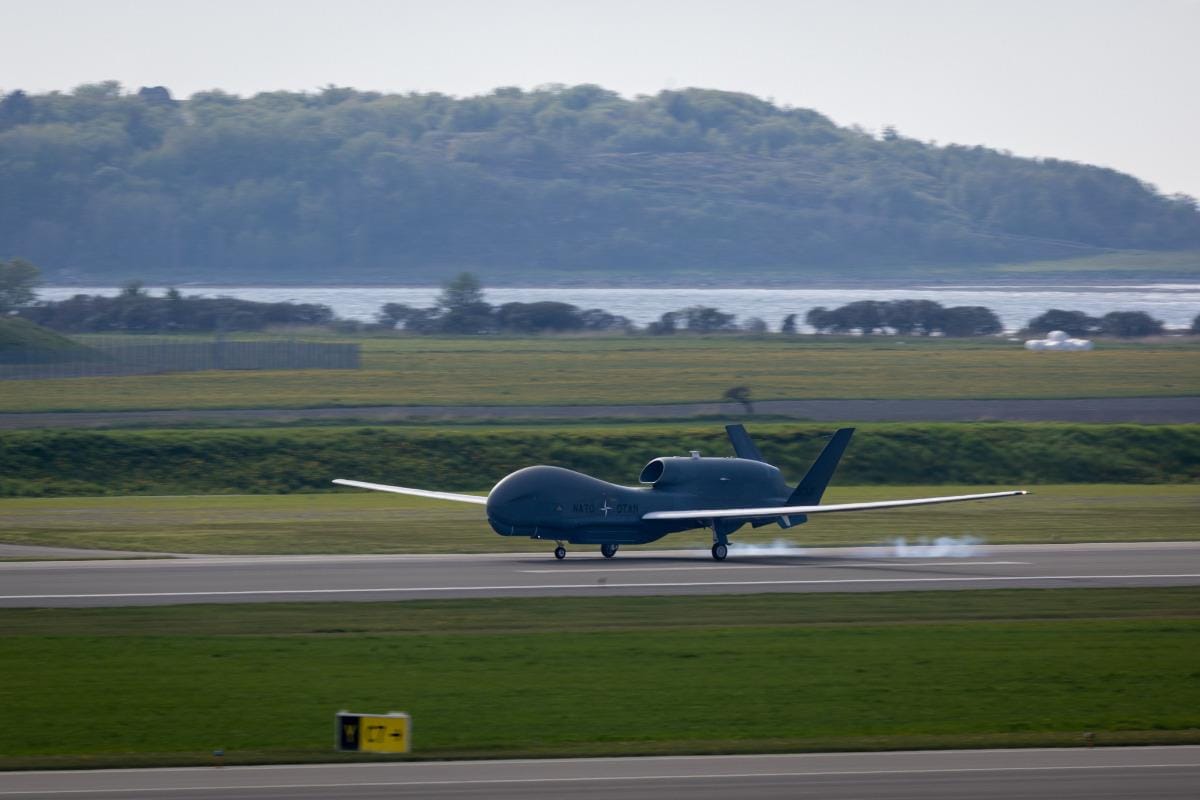
Completed
Winter (January – March)
STEADFAST DART 26 (2 Jan – 18 Mar, Germany / Baltic Sea)
NATO’s largest completed exercise of early 2026. The second deployment of the Allied Reaction Force (ARF), and its first under JFC Brunssum. Approximately 10,000–11,000 personnel from 13 nations — including ARF units from Bulgaria, Czechia, Germany, Greece, Italy, Lithuania, Spain, and Türkiye plus linking forces — exercised multi-domain operations at Bergen training area in Lower Saxony with amphibious elements on the Baltic coast.
Some 3,000 vehicles, including 1,000 British, arrived via Emden, testing 'Military Schengen' rail and road logistics. On 20 February, Turkey deployed a Bayraktar TB-3 fixed-wing UAV from the flight deck of TCG Anadolu — the first fixed-wing UAV operation from an amphibious assault ship in a NATO exercise. The TB-3 was subsequently used for live counter-UAS training against German and Italian Eurofighters and Spanish F-18s, supported by a Spanish A400M tanker.
ARF elements subsequently transitioned into the German Bundeswehr's Quadriga 2026 cluster — including Grand Quadriga 26, Northern Quadriga 26, and Medic Quadriga 2026 (the Bundeswehr's largest medical service exercise in decades, with 1,250 participants including 250 civilian agency representatives), while the Turkish Maritime Task Group sailed north to join Cold Response 26. That exercise-to-exercise force flow is what the 2026 calendar is built around. Read our deep-dive on Steadfast Dart 2026 for details:
 Großwald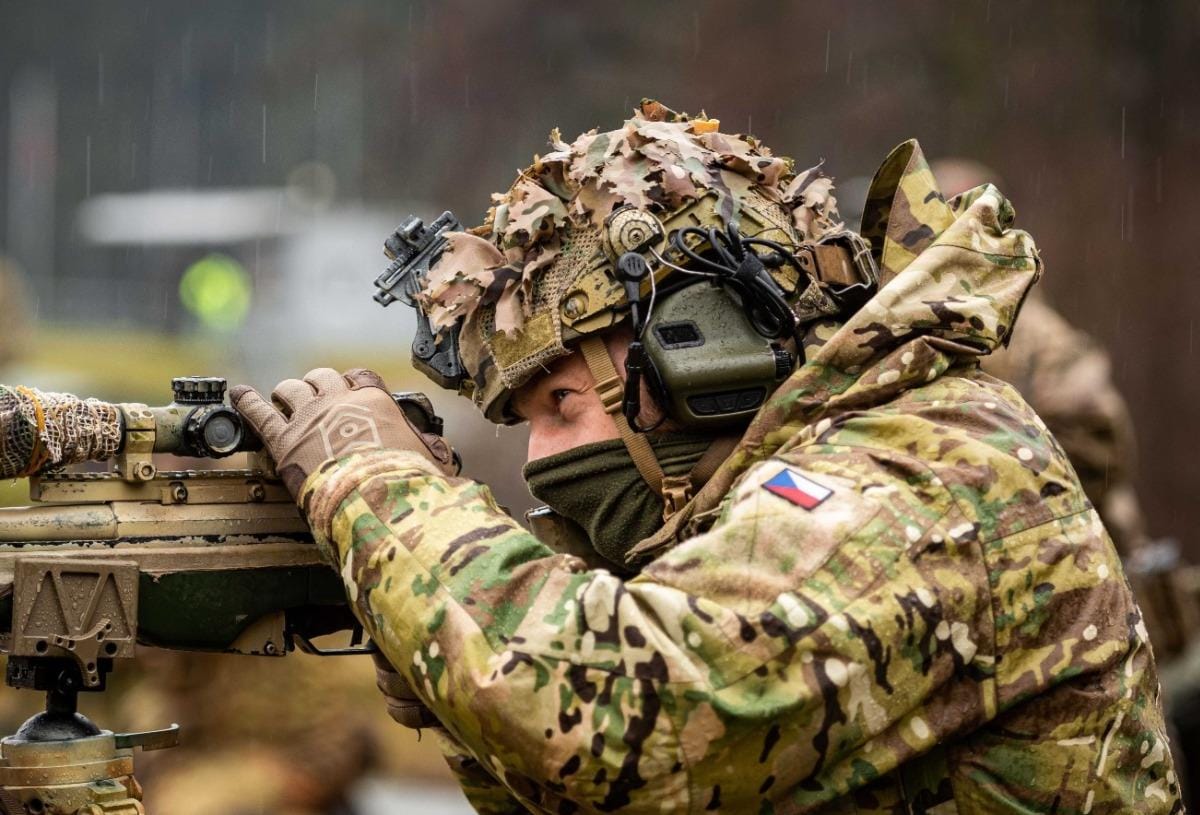
DYNAMIC FRONT 26 (26 Jan – 13 Feb 2026, Romania – completed).A multinational field artillery command-post and live-fire exercise at Romania's Cincu training centre, practising the Eastern Flank Deterrence Line (EFDL) concept. Eight NATO nations coordinated lethal and non-lethal fires across a distributed battlefield, testing multi-domain kill webs and counter-A2/AD capabilities. The exercise culminated with media day and live fires on 9 February in Cincu. (Overall, up to 23 NATO allies participated across five countries and nine training areas.)
ARCTIC DOLPHIN 26 (2–24 Feb, Norway) An annual ASW exercise off western Norway (Bjørnafjorden, Sognesjøen, Sognefjorden) bringing together Norwegian and allied navies, including Standing NATO Maritime Group One (SNMG1). The drill focused on anti-submarine warfare and certifying new submarine commanders in Arctic maritime conditions.
ORION 26 (8 Feb – 30 Apr, France / Atlantic) France's largest national exercise since the end of the Cold War: 12,500 personnel from 24 nations across a three-month arc from the Atlantic approaches to the national training areas. Built as a full-spectrum rehearsal against a peer-adversary scenario — amphibious, land, air, and information operations — it passed under NATO command for its April phase, folding the French national capstone into alliance structures. That hand-over is the pattern across 2026's national flagships, from Sweden's Aurora to Finland's Karelian Sword: the big national exercises no longer run parallel to NATO; they plug into it.
DYNAMIC MANTA 26 (23 Feb – 6 Mar, Mediterranean Sea) Major ASW/submarine warfare drill involving submarines, maritime patrol aircraft, helicopters, and surface ships from 10 allied nations: Canada, France, Germany, Greece, Italy, Portugal, Spain, Türkiye, the UK, and the US. The exercise integrated an uncrewed surface vehicle (USV) into operations, a first for Dynamic Manta.
DYNAMIC MARINER 26 (5–20 Mar, Mediterranean Sea) ARF Maritime Component certification (LIVEX). This year's iteration was geared specifically towards certifying the Royal Navy to assume command of the Allied Reaction Force (Maritime) on 1 July 2026, when the UK takes over the ARF/M lead from the current holder. The exercise drew heavily on Standing NATO Maritime Group 2 (SNMG2), currently under Spanish Navy command, with significant Spanish participation alongside Royal Navy, Italian, Greek and other allied surface, subsurface and air assets. MARCOM used the drill to validate command integration, sustainment, and multi-domain maritime operations in the Mediterranean.
COLD RESPONSE 26 (9–19 Mar, Norway / Finland / Sweden) The year's premier Arctic exercise. Norway-led, with 32,500 participants from 14 nations — 25,000 in Norway (11,800 on land, the remainder naval and air) and 7,500 in Finland — trained across land, sea, air, cyber, and space domains in Nordland, Troms, and western Finnmark, plus northern Finland. This was the first Cold Response under NATO's new Multi Corps Land Component Command (MCLCC) in Mikkeli, Finland, and the first to fall under the Arctic Sentry umbrella. A large-scale simulation ran in parallel, involving larger simulated forces to increase realism and complexity for participating headquarters. Maritime operations extended into the North Atlantic; air operations spanned all Nordic countries. Participating nations: Norway, Finland, the United States, the United Kingdom, Germany, the Netherlands, France, Italy, Canada, Spain, Türkiye, Sweden, Denmark, Belgium, and NATO. A critical test of JFC Norfolk's operational control over the Nordic region following its assumption of responsibility for the full Arctic AOR. The exercise was led from a joint Norwegian–US headquarters at Reitan, near Bodø. Norway has designated 2026 as the year of 'Total Defence,' and Cold Response was a central component, testing how civilian infrastructure and public institutions support military operations under crisis conditions.
Key developments during execution: The French carrier strike group (Charles de Gaulle), originally scheduled to participate in Cold Response’s maritime component, was retasked by President Macron to the Eastern Mediterranean around 7 March amid escalating Iran tensions. The United States has also withdrawn one squadron of F-35A Lightning IIs that had been scheduled to operate from Ørland, Norway — officials have not confirmed the reason, though concurrent Middle East commitments are the likely factor. These withdrawals reduce the exercise’s high-end maritime and air power contribution but do not affect the core land and Arctic operations.
On 16 March the defence ministers of Finland, Sweden and Norway issued a joint statement at the exercise site, highlighting substantial progress on NATO’s Forward Land Forces (FLF) Finland. Sweden is providing the core battlegroup, with the objective of achieving operational readiness before the NATO Summit in Ankara this summer.
 Großwald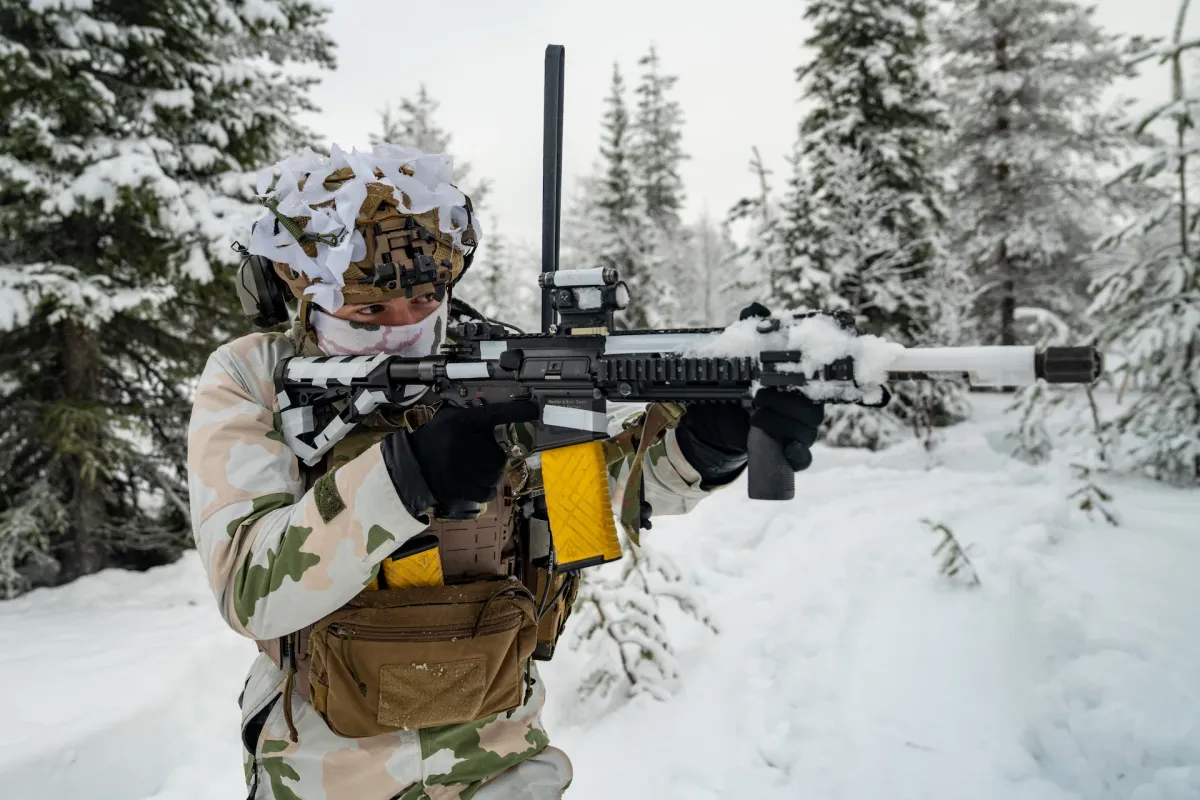
STEADFAST FOXTROT 26 (16–26 Mar, Ulm, Germany) Sustainment, medical, and enablement wargame hosted by JSEC at Ulm. The 2026 iteration expanded on previous years by adding dedicated medical and sustainment wargames alongside the core enablement rehearsal, and for the first time fed directly into the iterative development of NATO's Reinforcement and Sustainment Network (RSN). Participants rehearsed challenging elements of a reinforcement-by-forces and sustainment operational plan, testing deployment sequencing across 32 allies under the New Force Model structure. Outcomes will feed into the current RSN operational plan ahead of 2027 live exercises.
SEA SHIELD 26 (23 Mar – 3 Apr, Romania / Black Sea — completed) Romania-led multinational naval exercise bringing together approximately 2,500 personnel from 13 nations, with 48 ships, 64 combat vehicles, 10 aircraft, and 20 unmanned systems. Operations spanned maritime, riverine, aerial, land, and underwater domains across the Black Sea and Danube Delta. Romanian Naval Forces provided the core contribution, with frigates Regele Ferdinand and Mărăști and minehunter I. Ghiculescu; ground elements came from the 1st and 9th Mechanised Brigades and the Multinational Brigade South-East, with French and Spanish contingents. Part of Romania's extensive 2026 exercise programme.
NEPTUNE STRIKE 26-1 (25 Mar – 1 Apr, Western & Central Mediterranean) The first iteration of NATO's premier enhanced Vigilance Activity in 2026, led by STRIKFORNATO from Oeiras, Portugal. The exercise brought together the Spanish Navy's Juan Carlos I expeditionary strike group, the Italian Navy's Cavour carrier strike group, and — participating from the southeastern Mediterranean — the French Navy's Charles de Gaulle carrier strike group. Approximately 3,000 personnel, 15 ships, and 30 aircraft from 12 nations (Albania, Bulgaria, Croatia, Finland, France, Germany, Greece, Italy, the Netherlands, Romania, Spain, and the United States) conducted air and maritime strike operations across the Mediterranean, with air missions extending into continental Europe (Bulgaria, Poland, Romania) and the Black Sea. NATO ISR Force RQ-4D Global Hawks from Sigonella provided surveillance support. SACEUR Gen. Grynkewich visited STRIKFORNATO headquarters during execution. Notably, the exercise focused on NATO's southern and southeastern flanks rather than the originally anticipated multi-theatre North Atlantic/Baltic scope.
Spring (April – May)
AFRICAN LION 26 (20 Apr – 8 May, Morocco / Tunisia / Ghana / Senegal) AFRICOM's largest annual joint exercise, led by U.S. Army SETAF-AF alongside the Royal Moroccan Armed Forces. Final figures: more than 5,600 personnel from over 40 nations — substantially below the 10,000+ figure projected in earlier USAREUR-AF planning materials. The 2026 iteration was characterised by heavy industry experimentation: more than 30 US-based industry partners fielded capabilities including AI decision-support systems, robotic targets for live fire, ground sensing, and FPV drone operations against moving armoured targets. A multi-language AI capability delivering real-time Arabic-to-English translation over MPU5 radios was validated at Southern Zone Headquarters in Agadir on 4 May. Italian and French special operations units partnered with Tunisian counterparts on airborne operations and joint targeting. C-130 dirt landing certification, rarely available in Europe, was one of the exercise's principal draws. The culminating live-fire phase took place at Cap Draa near Tan-Tan on 8 May.
NEPTUNE STRIKE 26-2 (late Apr – 30 Apr, Mediterranean) Led by STRIKFORNATO from Oeiras and concluded 30 April. The second 2026 iteration of NATO's premier enhanced Vigilance Activity spanned NATO's southern and south-eastern flanks. The French Carrier Strike Group around FS Charles de Gaulle led the maritime component, with attached Italian, Spanish, and Netherlands frigates. The US carrier strike group originally scheduled to lead alongside the French CSG did not participate; ongoing Middle East commitments resulted in the US foregoing the iteration entirely. Participating forces drew from Albania, Bulgaria, France, Greece, Italy, Montenegro, Portugal, Romania, Türkiye, and the United Kingdom. Air missions included RAF Typhoons and Romanian F-16s under Allied Air Command. The activity was formally framed as part of NATO's networked enhanced Vigilance Activity architecture alongside Eastern Sentry, Arctic Sentry, and Baltic Sentry. The French CSG transited the Suez Canal on 6 May en route to the Red Sea as part of the Anglo-French maritime coalition reinforcing freedom of navigation in the Strait of Hormuz.
AURORA 26 (27 Apr – 13 May, Sweden) Swedish-led multinational LIVEX involving 18,000 personnel from 13 nations across Sweden, the Baltic Sea, and Gotland. Sweden's first Aurora exercise as a fully integrated NATO Ally, and a large-scale rehearsal of NATO-adapted operational defence plans under collective defence. Approximately 16,000 Swedish personnel were augmented by 1,500 allied troops from 12 nations, with Ukrainian drone operators participating under the JEF–Ukraine Enhanced Partnership agreed at the Oslo summit in May 2025. Around 1,300 personnel from the United States, the United Kingdom, Denmark, and Ukraine reinforced Gotland — the focal point of Baltic Sea defence — during the concluding combined-arms phase on 11 May. The exercise also previewed elements of the distributed operations and multi-domain integration central to Ramstein Flag 26 in June. Linked to Sword 26 under the same Key Strategic Activity framework within a Germany-led Consolidated Strategic Opportunity.
SWORD 26 (27 Apr – 31 May, High North / Baltic / Poland) USAREUR-AF's rebranded and restructured successor to the DEFENDER series. Approximately 15,000 troops from 11 nations operate across eight countries from distributed locations in the High North, Baltic region, and Poland, organised around three linked exercises: Saber Strike (Baltic / Poland), Immediate Response (High North), and Swift Response (specialised deployment). Gen. Christopher Donahue, USAREUR-AF commanding general, has framed the exercise around AI-enabled warfighting at scale and the operationalisation of the Eastern Flank Deterrence Initiative (EFDI). Notable activity includes: the 2d Cavalry Regiment's tactical road march from Vilseck, Germany to Poland and Lithuania, departed 27 April; a Saber Strike combined-arms rehearsal at Bemowo Piskie Training Area, Poland on 5 May; Polish exercise Amber Shock 26 at the Orzysz training ground 60 km from the Kaliningrad oblast border, involving 3,500 troops; and the main Saber Strike fires phase at the Vuosanga training area in Finland's Kainuu region, near the Russian border. Sword 26 represents the first practical application of in-theatre force employment under the post-DEFENDER doctrinal shift, validating NATO's regional defence plans rather than rehearsing transatlantic reinforcement. Linked to Aurora 26 under the same Key Strategic Activity framework within a Germany-led Consolidated Strategic Opportunity.
MARE APERTO 26-1 (3–27 May, central Mediterranean) The Italian Navy's principal annual high-end maritime exercise, conducted in the central Mediterranean with NATO forces and French Navy participation. Initial Planning Conference held 11–12 February at Comando in Capo della Squadra Navale (Santa Rosa, Roma). Scenarios span CBRN response, cyber defence, public information, environmental and heritage protection, humanitarian assistance, and high-end multi-domain operations. The exercise integrated ITA MINEX 26 (Italian Mine Warfare Exercise) and served as a key test of Italian Navy combat readiness across the spectrum.
SPRING STORM 2026 / KEVADTORM 26 (4 May – 1 Jun, Estonia + NE Latvia) The 20th iteration of Estonia's largest annual exercise, conducted in alternation with Hedgehog (Siil), which last ran in 2025. Over 12,000 troops at peak, with participating contingents from Latvia, Lithuania, the United States, the United Kingdom, Canada, Finland, Sweden, Denmark, the Netherlands, France, Poland, Ukraine, Czechia, Germany, Romania, and Portugal. Primary training audiences are the 2nd Infantry Brigade (Estonian Division) and Regional Command South (Estonian Defence League). The exercise unfolds in three phases: division-level command-post exercise (4–9 May), unit training and force-on-force battles in south-eastern Estonia and north-eastern Latvia (10–22 May), and live-fire at the Central Training Area (23 May – 1 June). Spring Storm 2026 sits adjacent to the Sword 26 footprint and shares national contingents with the broader Nordic-Baltic cluster.
NATO TIGER MEET 2026 (4–15 May, Araxos AB, Greece) The Hellenic Air Force's 335 Squadron hosted the 2026 iteration of NATO's longest-running multinational air exercise at Araxos Air Base. Nine Allied nations participated — Belgium, Czechia, Germany, Greece, Hungary, Italy, Poland, Spain, and Switzerland — with observers from Austria, France, the United Kingdom, India, and the Netherlands. More than 50 fighter aircraft and helicopters flew daily missions across the Athens Flight Information Region, with approximately 1,000 personnel deployed. Platforms included F-16 Fighting Falcons, Eurofighters, Gripens, Tornados, F/A-18 Hornets, AW101 Merlins, and Venom helicopters. Mission sets covered defensive and offensive counter-air, air interdiction, dynamic targeting, suppression and destruction of enemy air defences (SEAD/DEAD), and air power contribution to counter-land and counter-maritime operations. The Best OPS trophy went to Belgium's 31 Squadron operating F-16A/B MLU; the Silver Tiger to Italy's 12° Gruppo. The Tiger Association traces back to 1961.
STEADFAST DETERRENCE 26 (5–13 May, NATO-wide) SHAPE's premier deterrence and collective defence exercise at strategic and operational levels, directed by the Joint Warfare Centre at Stavanger. Approximately 8,000 military and civilian staff from all 32 NATO member states participated across SHAPE, all Allied Command Operations joint and domain headquarters, and multiple locations across Europe and the United States. The third iteration of the series, and the first to implement NATO's new Campaign Approach to Exercises — designed for greater realism, warfighting readiness, and multi-domain command and control. The scenario focused on the Arctic and the High North, stress-testing NATO's integrated military plans under the Concept for Deterrence and Defence of the Euro-Atlantic Area. The first JWC exercise to incorporate AI-enabled warfighting platforms into scenario delivery.
NATO–SERBIA EXERCISE 2026 (May, Bujanovac, Serbia) The first-ever joint military exercise between NATO and the Serbian Armed Forces, hosted in Bujanovac and concluded in late May. Approximately 600 troops from NATO allied nations trained alongside Serbian personnel over two weeks in peace support operations. Participants: Serbia, Italy, Romania, Türkiye, France, Germany, Montenegro, the United Kingdom, and the United States. Led on the NATO side by JFC Naples (Admiral George M. Wikoff). Modest in scale but historically significant as a precedent for practical NATO–Serbia military cooperation despite Belgrade's formal non-alignment.
TROJAN FOOTPRINT 2026 (11–22 May, multi-country) The largest US Special Operations Forces-led exercise ever conducted in Europe, concluded 21 May. US Special Operations Command Europe (SOCEUR) led approximately 3,000 personnel — 1,000 US service members and 2,000 SOF operators from 23 NATO Allies and partner nations. Substantial contingents came from Bulgaria, Croatia, Estonia, Georgia, Germany, Greece, Hungary, Latvia, Lithuania, North Macedonia, Poland, and Romania. Operations spanned multiple training locations across the European theatre, with notable maritime infiltration activity in the Gulf of Elefsina (Greece) on 13 May. Training covered the full SOF competency spectrum — reconnaissance, sensitive-site operations, direct action — and tested hybrid-threat response concepts and new operational technologies. Lt. Gen. Richard Angle, SOCEUR commander and head of NATO Special Operations Command, framed the exercise as a demonstration that the Alliance has "both the will and the capability to defend every inch of the Alliance." Trojan Footprint has been biennial since 2016.
THUNDER FORTRESS 26 (concluded 14 May, Lithuania) The command-post phase of Lithuania's 2026 Thunder exercise cycle, run by the Lithuanian Armed Forces. The Joint Armed Forces Command, service command posts, and unit command elements rehearsed military-operation planning procedures against the actual state defence plan, updating the Branch Plan, drafting tactical plans, and refining coordination with NATO Allies. Emphasis fell on command-and-control integration, reserve integration, and synchronisation across multinational and national headquarters; the Lithuanian Navy command-and-control element was separately evaluated. A wargaming phase tested the force structure against the equipment and weapons Lithuania expects to field by 2030. Defence Staff personnel concurrently participated in NATO's Steadfast Deterrence 26 in Norway, exercising cross-coordination and information exchange. Thunder Fortress is the planning-focused first half of the cycle; the live tactical-manoeuvre phase, Thunder Strike 26, runs from 17 September to 15 October with up to 2,400 active reservists called up, its state-defence-plan elements trained within NATO's Steadfast Duel 26.
DYNAMIC MONGOOSE 26 (18–29 May, Norwegian Sea / High North) NATO's principal annual anti-submarine warfare exercise in the High North, led by NATO Allied Maritime Command and hosted by Norway in its alternating Norway–Iceland cadence (DM25 was hosted from Reykjavík). Surface operations are hubbed at Trondheim, with air assets supported from Stavanger; Rear Admiral Bret Grabbe, Commander Submarines NATO, commands the task force. Nine nations took part: Germany, Norway, Denmark, Portugal, France, the Netherlands, Canada, the United Kingdom, and the United States, with submarines, surface ships, and maritime patrol aircraft operating across the Norwegian Sea and the GIUK-N Gap. Standing NATO Maritime Group 1 (SNMG1) provided the core surface element, and HMS Prince of Wales integrated into the ASW task force following her Stavanger port call, folding Operation Firecrest's Phase 1 air group into the Dynamic Mongoose AOR. On 21 May, NATO MARCOM reported that the SNMG1 frigate NRP Dom Francisco de Almeida (F334) and a Royal Navy Merlin Mk2 from HMS Prince of Wales shadowed the Russian surveillance ship Yury Ivanov, which had been loitering near exercise forces.
OPEX 26 (18–29 May, Mangalia / Black Sea) Romanian Naval Forces-led operational experimentation exercise focused on autonomous maritime systems, conducted in the military port of Mangalia and adjacent Black Sea areas. Six NATO nations took part: Bulgaria, Canada, Portugal, Romania, the United States, and Türkiye, alongside civilian unmanned-systems manufacturers. Approximately 1,000 personnel and 50 pieces of equipment are involved. Romanian assets include diver-support vessel Grigore Antipas, minesweeper Capt. Constantin Dumitrescu, and hydrographic vessels Ocean 1 and Ocean 2. Exercise focus: surface and underwater unmanned-system employment and tactical manoeuvres to strengthen multinational interoperability. OPEX 26 is the fourth in a sequence of NATO-relevant exercises on Romania's Black Sea coast since March. Not to be confused with EDA's separate OPEX 2026 — a European Defence Agency operational experimentation campaign scheduled for October at Santa Margarida, Portugal.
KARELIAN SWORD 26 (22–29 May, Southeastern Finland) The Finnish Army's principal spring exercise, led by the Karelian Brigade under Col. Ari Määttä across the Kymenlaakso, South Savo, and South Karelia regions. Approximately 10,000 personnel — 5,800 conscripts, 2,700 reservists, and 1,400 Finnish Defence Forces personnel — alongside ~1,500 vehicles and significant air activity. Allied participation: the US Virginia National Guard and a UK Army attack-helicopter unit. The exercise sits adjacent to Sword 26's Finnish component and forms part of a broader Finnish Army exercise series involving 19,000 personnel across Finland in May. The training area extends within tens of kilometres of the Russian border with the Leningrad and Karelia regions, and serves as the final exercise for conscript leaders trained in the 2/25 and 1/26 cohorts.
Early Summer (June)
ASTRAL KNIGHT 26 (1–12 Jun, United Kingdom) US European Command's capstone integrated air and missile defence exercise, led by US Air Forces in Europe – Air Forces Africa from bases across the United Kingdom. B-1B Lancers and B-52s integrated directly with F-35A and F-15E fighter formations over the North Sea, rehearsing the shift from defensive counter-air to offensive strike in a contested environment. The 606th Air Control Squadron deployed distributed tactical command-and-control from multiple locations, validating air-battle management away from fixed nodes. A US-flagged exercise rather than a NATO one, but run on allied soil against the same threat picture the alliance's IAMD architecture is being built for.
BALTOPS 26 (4–19 Jun, Baltic Sea) The 55th iteration of NATO's premier annual maritime exercise in the Baltic, led by US Naval Forces Europe-Africa / Sixth Fleet and command-and-controlled by STRIKFORNATO from Oeiras under the Arctic Sentry umbrella, an unusual framing given Baltic Sentry's pre-existing remit, now confirmed at the pre-execution stage. Around 20 vessels from 15 nations and roughly 6,000 personnel — about half the scale of BALTOPS 25 (16 allies, 40+ ships, ~9,000 personnel), with the reduction attributed to US and allied forces redeployed to the Middle East and the Arctic. The exercise nonetheless remains the largest naval manoeuvre in the Baltic this year. The United States provides the flagship, the US 6th Fleet command-and-control ship USS Mount Whitney (LCC 20), normally forward-deployed to Gaeta, Italy. Planning was hosted by the Finnish Navy Command in Turku, 14–16 April. The exercise launched from Gdynia in the Bay of Gdańsk, moving east from the previous year's Warnemünde start, and concluded at Kiel, coinciding with Kieler Woche. Expected scope: amphibious operations, gunnery, air defence, anti-submarine warfare, mine countermeasures, explosive ordnance disposal, medical response, and unmanned surface/underwater vehicle integration. German Rear Admiral Stephan Haisch framed the US-led drill as a sign of alliance strength amid the US drawdown debate.
RAMSTEIN FLAG 26 / RAFL26 (8–19 Jun, Norway / Finland / Sweden / Denmark / Spain) NATO Allied Air Command's premier live-fly exercise. The third iteration of the Flag-series since its 2024 launch, and the first to be led independently by AIRCOM. Approximately 19 nations, more than 150 aircraft, and roughly 150 sorties per day across NATO's Joint Operations Area North-West (Nordic) and Joint Operations Area South-East (Mediterranean) — operations stretch from the northernmost parts of Norway to the southern reaches of Spain. Strategic priorities: Counter Anti-Access/Area Denial (C-A2AD), Integrated Air and Missile Defence (IAMD), Agile Combat Employment (ACE), and improved multi-domain information-sharing. Live-fly missions are combined with synthetic training. RAFL26 builds directly on the air-component lessons from Aurora 26 and represents the largest planned air-domain training event of 2026. The Tactical Leadership Programme at Albacete serves as the main hub for JOA SE; Kallax Air Base in northern Sweden hosts JOA NW media activity on 16 June.
High Summer (July – August)
OPERATION FIRECREST (5 May – 24 Jul, North Atlantic / High North — Phase 1, completed) HMS Prince of Wales sailed from Glen Mallan, Scotland on 5 May, leading a reduced UK task group — Type 45 destroyer HMS Duncan and RFA Tidespring, under Commodore Rich Hewitt — across Nordic waters and the High North under NATO's Arctic Sentry mission. The embarked air group was helicopter-heavy, fixed-wing F-35B numbers thinned by concurrent Lightning Force commitments, and the anticipated US cross-deck element did not materialise. Phase 1 culminated with the group leading NATO's Neptune Strike 26-3 enhanced Vigilance Activity (17–23 July) in the High North alongside the Spanish ESG; Prince of Wales and Duncan returned to Portsmouth on 24 July to stand down for leave and maintenance, with a Phase 2 confirmed for northern European waters this autumn.
BALTIC TRUST 26 (3–14 Aug, Sēlija range, Latvia — completed) A deliberately narrow exercise. Around 650 participants from 24 nations worked at Latvia's Sēlija range: allied operators alongside Ukrainian, Australian, and Japanese personnel, with industry teams from several EU states. They drilled counter-drone defence as a single integrated problem, cueing radars, sensors, cameras, and jammers together against reconnaissance and attack drones, with suppression tactics validated under field conditions. It was run by the Latvian National Armed Forces with the NATO Communications and Information Agency, under Allied Command Transformation's layered counter-UAS initiative. The stated purpose was to close a gap in live, integrated tactical training, not in procurement: allied inventories already hold counter-drone systems; what had been thinner was the practice of operating them together, against the threat, at the same time.
Regional & Domain Hot-Spots
Northern Flank & Arctic Security
Cold Response 26 (9–19 March, completed) anchored the Arctic calendar under Arctic Sentry's umbrella, though its maritime and air components were reduced by the withdrawal of a US F-35 squadron from Ørland. Arctic Dolphin 26 (completed February) tested ASW in Norwegian fjords. Denmark's Arctic Endurance ran concurrently in and around Greenland. Steadfast Deterrence 26 (5–13 May, completed) followed as the strategic CPX counterpart, focused on the Arctic and the High North under SHAPE's new Campaign Approach to Exercises. Ramstein Flag 26 (8–19 June, completed) exercised allied air power from northern Norway. In July the High North drew the maritime main effort: NATO's Neptune Strike 26-3 enhanced Vigilance Activity (17–23 July, 14 nations) ran across the High North and North Atlantic, led by the UK Carrier Strike Group and the Spanish ESG, with the carrier group's Operation Firecrest Phase 1 concluding on 24 July ahead of an autumn Phase 2. The Nordic Arctic Challenge Exercise is biennial and is not running in 2026 (next iteration 2027). Lion Protector 26, the UK-led JEF series across the Baltic, Iceland, the Danish Straits, and Norway, has been running since 3 August and continues to 12 October; Northern Viking 2026 (22 August – 3 September, completed) worked anti-submarine and mine warfare across the GIUK gap from Keflavik with eleven nations under JFC Norfolk's framing. Denmark's Arctic Shield 2026 (7–18 September) follows in southern Greenland and around Kangerlussuaq: more than 400 soldiers, sailors and airmen from around ten nations under Joint Arctic Command, working ground, air, drone and special-operations serials as part of Arctic Sentry. The Royal Navy's Strike Warrior 26 (21 September – 9 October) then brings more than 30 ships and aircraft into waters north and east of the UK.
Baltic & Nordic Deterrence
Steadfast Dart 26 (January–March, completed) tested the ARF's rapid deployment into northern Germany. The Nordic-Baltic centre of gravity in May 2026 was formed by four concurrent exercises: Sword 26 (27 April – 31 May), Sweden's Aurora 26 (27 April – 13 May, 18,000 personnel including Ukrainian drone operators on Gotland), Estonia's Spring Storm 2026 (4 May – 1 June, 12,000+ personnel), and Finland's Karelian Sword 26 (22–29 May, 10,000 personnel with US and UK contingents). Trojan Footprint 2026 (11–22 May) provided the SOF layer across Eastern Europe, while BALTOPS 26 (4–19 June, ~20 ships, 6,000 personnel from 15 nations) and Ramstein Flag 26 (8–19 June) closed the early-summer cluster. In June, Lithuania's Iron Wolf 2026 (8–22 June) exercised the multinational eFP battlegroup with UK and Polish forces and heavy drone integration, and Estonia hosted Vigorous Warrior 26 (8–20 June), NATO's largest military-medical exercise (~2,000 personnel, ~30 nations). August narrows the regional effort to a single specialism: Latvia's Baltic Trust 26 (3–14 August, Sēlija range) brings roughly 650 allied, Ukrainian, Australian and Japanese participants together for integrated counter-drone drills run with the NATO Communications and Information Agency. Namejs 26 (2 September – 8 October, nationwide) follows with around 12,000 Latvian troops and Zemessardze plus Canadian, US, Estonian and Lithuanian units under NATO Multinational Division North, and the same counter-drone emphasis carried up to national scale. Strong Griffin 2026 (2–20 September, Švenčionys district near the Belarus border) puts around 2,500 troops and 500 vehicles from Lithuania, the US, Poland, the Netherlands, France and Portugal, with Ukraine and Moldova as partners, through uncrewed-systems serials from reconnaissance to long-range strike and counter-UAS under the Griffin Infantry Brigade. Lithuania's Thunder cycle runs in two phases: the command-post exercise Thunder Fortress 26 concluded on 14 May, with the live tactical-manoeuvre phase, Thunder Strike 26, running 17 September – 15 October with up to 2,400 active reservists called up and its state-defence-plan elements trained within NATO's Steadfast Duel 26; Thunder Storm no longer runs as a distinct top-level exercise.
Black Sea & Southeastern Flank
Dynamic Front 26 (February) tested multi-domain fires at Romania's Cincu. Sea Shield 26 (23 March – 3 April, completed) was the flagship Black Sea naval drill, led by the Romanian Armed Forces with approximately 2,500 personnel from 13 nations and significant French and Spanish contributions. OPEX 26 (18–29 May) extended the Romanian Black Sea programme into unmanned maritime systems, with six NATO navies operating from Mangalia. Bulgaria's Breeze 2026 (10–19 July) carried the Black Sea calendar into mid-summer: the Bulgarian Navy's 30th iteration, ten navies operating alongside the standing Black Sea mine-countermeasures group. Romania's broader 2026 programme also includes Carpathian Arc 26 (MNC-SE led), Dacia 26 (linked to Steadfast Defender 27), Land Shield 26, Histria 26, and Burebista 26 (14–25 September, Romanian Air Force-led, nationwide). NATO–Serbia Exercise 2026, while modest in scale (~600 troops in Bujanovac), marked the first-ever joint exercise between NATO and the Serbian Armed Forces. Eastern Sentry continues to provide persistent air defence and surveillance from the High North to the Black Sea. Off-theatre but aimed at it: Sea Breeze 26-2 (13–25 July), the US- and Ukraine-led mine-warfare exercise hosted by the Royal Navy at Portland, put five donated Ukrainian minehunters through the largest UK-hosted iteration to date, working up the mine-countermeasures force Ukraine is building for its own waters.
Mediterranean & North Africa
African Lion 26 (20 April – 8 May, completed) closed with a final force of more than 5,600 personnel from over 40 nations across Morocco, Tunisia, Ghana, and Senegal — substantially below pre-execution projections of 10,000+ personnel. The Mediterranean saw Dynamic Manta 26 (completed March), Dynamic Mariner 26 (completed March), Neptune Strike 26-1 (25 March – 1 April, completed), which brought together the Spanish Juan Carlos I ESG, Italian Cavour CSG, and French Charles de Gaulle CSG across the western and central Mediterranean with contributions from 12 nations. The theatre also saw NATO Tiger Meet 2026 (4–15 May at Araxos AB, completed), Mare Aperto 26-1 (3–27 May, Italian Navy-led with NATO and French Navy participation), and Neptune Strike 26-2 (concluded 30 April). The latter was conducted without US carrier participation; the French CSG around FS Charles de Gaulle led the activity, transiting the Suez Canal on 6 May en route to the Anglo-French maritime coalition in the Strait of Hormuz. The Mediterranean theatre's strategic centre of gravity has accordingly shifted south and east through the spring.
2026 Exercise Timeline: Gantt View
Bars span exercise duration; vertical position groups by status. Persistent Sentry operations shown at top. Diagonal-stripe bars mark exercises with confirmed framing but dates TBC. "Today" line auto-marks the current date.
Frequently Asked Questions
What is the biggest NATO exercise in 2026 so far?
Cold Response 26 (9–19 March), with 32,500 personnel from 14 nations across Norway and Finland, was the largest NATO live exercise of 2026. Aurora 26 (27 April – 13 May, 18,000 personnel) and Sword 26 (around 15,000 US and allied troops across eight countries) followed in the spring. That live-exercise season has since concluded: BALTOPS 26 and Ramstein Flag 26 both wrapped in mid-June.
Which NATO exercises are coming up in autumn 2026?
Running now: Latvia's Namejs 26 (2 September – 8 October, around 12,000 personnel plus allies); Lithuania's Strong Griffin 2026 near the Belarus border (2–20 September, around 2,500 troops from six allies with Ukraine and Moldova, uncrewed-systems focus); REPMUS / Dynamic Messenger off Portugal (31 August – 25 September; 36 navies, NATO's operational phase from 15 September); the JEF's Lion Protector 26 series (3 August – 12 October), whose Baltic escort phase concluded in mid-August with North Atlantic, Iceland and High North phases still to come; the Czech-led close air support exercise Ample Strike 26 (7–17 September, more than 700 personnel and 20 JTAC teams from 17 nations); the Dutch-led airborne exercise Falcon Leap (7–18 September, Eindhoven, 11 nations); Denmark's Arctic Shield 2026 in southern Greenland and around Kangerlussuaq (7–18 September, more than 400 personnel from around ten nations, under Arctic Sentry); and Romania's Burebista 26, a Romanian Air Force-led joint exercise across national territory (14–25 September). Next up: the Royal Navy's Strike Warrior 26 in waters north and east of the UK (21 September – 9 October, more than 30 ships and aircraft) and Lithuania's Thunder Strike 26 (17 September – 15 October, up to 2,400 active reservists called up; its state-defence-plan elements are trained within NATO's Steadfast Duel 26). The US Army's Saber Junction 26 at Hohenfels (15 August – 13 September, more than 4,400 troops from 11 nations) concluded on 13 September; Northern Viking 2026 concluded at Keflavik on 3 September. Dates pending: the NATO-wide Steadfast Duel 26 command-post exercise; Steadfast Noon, the annual nuclear-deterrence air exercise (October expected); Steadfast Dagger 26, the Allied Reaction Force certification (late November – December cadence); and Cyber Coalition 26. The UK Carrier Strike Group's Operation Firecrest returns for Phase 2 in northern European waters, undated, with HMS Prince of Wales alongside in Portsmouth.
What is BALTOPS 2026 and when does it run?
BALTOPS 26 is NATO's premier annual Baltic maritime exercise; its 55th iteration ran 4–19 June 2026. It was led by US Naval Forces Europe-Africa / Sixth Fleet and command-and-controlled by STRIKFORNATO, with the US command ship USS Mount Whitney as flagship. Around 20 vessels from 15 nations and roughly 6,000 personnel took part — about half the size of BALTOPS 25 — launching from Gdynia, Poland, and concluding at Kiel. It rehearsed sea-route protection around Gotland, mine countermeasures, air defence, and unmanned-systems integration.
What replaced DEFENDER-Europe in 2026?
Sword 26. The US Army's DEFENDER series, run from 2020 to 2025, focused on moving forces from the United States into Europe and integrating them with allies. Sword 26 (27 April – 31 May) restructures that logic: rather than rehearsing transatlantic reinforcement, it uses forces already in theatre to validate NATO's regional defence plans and operationalise the Eastern Flank Deterrence Initiative (EFDI), across eight countries in the High North, the Baltic region, and Poland. It retains the Baltic-focused Saber Strike but dropped the Black Sea–oriented Saber Guardian.
Why do NATO's 2026 exercises look scaled back?
Several 2026 drills are smaller than recent years because US and allied forces have been drawn to other theatres — chiefly the Middle East and the Strait of Hormuz, and the Arctic. BALTOPS 26 is roughly half its 2025 size; the US declined to send a carrier to Neptune Strike 26-2; and a US F-35 squadron and the French carrier were withdrawn from Cold Response 26 mid-exercise. NATO officials frame the reductions as reflecting operational demands elsewhere rather than reduced commitment, with the exercises still intended to signal alliance cohesion.
What are the 'Sentry' operations, and how do they differ from an exercise?
Baltic Sentry, Eastern Sentry, and Arctic Sentry are open-ended, multi-domain activities — not time-limited exercises. An exercise has fixed start and end dates; a Sentry operation runs continuously with no stated end date, keeping allied forces persistently deployed. Together they cover the Baltic Sea, the eastern flank, and the Arctic. Arctic Sentry, launched 11 February 2026, is the newest. NATO has not maintained this kind of continuous, multi-theatre presence since the Cold War.
Which 2026 exercises take place near the Russian border?
Several. Finland's Karelian Sword 26 trained within tens of kilometres of the Russian border with the Leningrad and Karelia regions; Poland's Amber Shock 26 (part of Sword 26) ran at Orzysz, about 60 km from Kaliningrad; and Estonia's Spring Storm 2026 operated in south-eastern Estonia and, for the first time, north-eastern Latvia. Sword 26's Saber Strike fires phase took place at Vuosanga in Finland's Kainuu region, also near the border.
Are Finland and Sweden now full participants in NATO exercises?
Yes. Aurora 26 was Sweden's first Aurora exercise as a fully integrated NATO ally, rehearsing alliance defence plans with allied reinforcement of Gotland. Finland hosted parts of Cold Response 26 and Sword 26, and the exercises advanced NATO's Forward Land Forces (FLF) Finland, with Sweden providing the core battlegroup. Both countries now anchor NATO's High North and Baltic posture.
Why isn't the full 2026 calendar published yet?
NATO and SHAPE release exercise details incrementally. Winter and spring drills are typically confirmed first; summer and autumn exercises are announced as late as April or May. This guide is updated as confirmations land. Planning for the following year runs 12–18 months ahead: the NATO Exercises 2027 calendar tracks 2027 entries from the first planning conferences, each labelled confirmed or projected.
Are these drills offensive in nature?
NATO classifies all exercises and operations as defensive and deterrent, designed to protect allied territory under Article 5 and improve interoperability.
Is this guide still being updated?
Yes, continuously. Bookmark this page, and subscribe to the free Großwald Signal — the daily briefing written by the same desk that maintains this guide.
Last updated: 15 September 2026
How to Track Late‑Breaking Changes
- Bookmark this guide—URL stays constant, content updates automatically.
- Subscribe to Großwald Signal — daily briefing, Mon–Fri, 23:00 CET — and Großwald Curated, the weekly synthesis.
- Check NATO’s official newsroom and SHAPE for primary‑source press releases.
Further Reading
 Großwald
 Großwald
About Großwald
Großwald is an independent European defence intelligence platform — where Europe's defence decisions become visible. We cover military systems, strategy, and geopolitical risk, with an editorial focus on NATO, Central and Eastern Europe, and the evolving architecture of European defence integration.
We serve decision-makers, military professionals, and researchers with high-signal, contextualised reporting. Verified. Attributed. Independent.
